Sunday, July 13, 2025

Contrarian Updates on 11 Jul 2025 [EN]


Global Markets


US Yield Curve & Fed Rate Monitor


Crypto Market Tracker 


Key Macro & Technicals


Market Commentary 


·         FX markets still trading in a range last 1M with USD Index -0.3%. Big trend still dollar weakness and stable $/CHF ironically the biggest movers during this period with -1.8% move among the major currencies. Deeper dive, shows $/CHF following through on the down-move since 2019 and next target would be ATL 0.7579 in 08/11. FX crosses also risk-on with EUR/JPY and AUD/JPY both rallying 3.5% and 3.8% respectively.


·         On 10/07, Well Fargo strategists cited that the US economy appear to be losing steam with real GDP contracting 0.5% in the 1Q25, a dip partly reflecting a surge in imports sparked by businesses racing to lock in order before Trump’s elevated tariffs. All else being equal, imports in national income and product accounts can mechnically reduce GDP. They also added that their projection for real GDP expansion of 1.8% in the 2Q25 “may overstate the strength of the economy at present”.


·         On 29/06, China manufacturing PMI fell abruptly to 49.7 as local manufacturers grappled with sluggish overseas demand amid relatively high US trade tariffs. Washington and Beijing were also seen agreeing to uphold the May deal, as well as establish a framework for a trade deal in Jun 2025.


·         On 20/06, the USD slipped to multi-year lows against EUR and CHF alongside Asia FX as concerns about Fed independence undermined faith in the soundness of USA’s monetary policy. InTouch Capital Markets Kieren said “market will likely bristle at any early move to name Powell’s sucessor, particualrly if it appears politically-motivated”. The ending of “US exceptionalism” has been a major theme in the USD decline in recent months as investors question it dominant reserve currency status and main safe haven among currencies


·         On 20/06, Chinese Premier Li Keqiang said “China will take forceful steps to boost consumption” at the latest AIIB annual meeting. Beijing has through late-2024 rolled out a slew of measures aimed at boosting laggard consumer spending, most notably subsidies on eletronics and household goods. Whilst the swathe of recent econommic readings show some pressure from the US tarriffs, they also highlighted the resilience of the Chinese economy


·         On 30/06, Canada announced it would rescind its Digital Services Tax (DST) clearing the way for the resumption of trade and security negotiations with the US, with both sides aiming to strike a deal by 21/07. The decisions comes just days after Trump abruptly called off trade talks on 28/06, denouncing the attack as a “blatant attack”.


·         Most of the action lie in MSCI World +3.7% and US equities as S&P 500, DJI, NASDAQ have gained 4.7%, 5.2% and 6.1% respectively. Updated the FIbo projections and xxx and 6500 levels now look within range for both MSCI World and S&P 500. Another major mover has been the Nikkei 225 which has rallied +6% lately, which has broken out a bullish triangle formation. CSI 300 bullish falling wedge formation breakout also following as it been clinging to key 4000 level last few months. Indian and Russian equities also experience positive momentum with SENSEX, Nifty 50 and Russian Index jumping 3.1 – 3.5% range. Sector-wise most of the gains have been around financials, technology and communication sectors based on XLC, XLF, XLK with the only outlier being energy with XLE -3.8% no doubt to to collapsing oil prices. Unsurprisingly, OVX has shot up 17.6% whilst all other volatility indices like VIX, SKEW, VVIX have faded 20%.


·         Was reviewing prior S&P 500 Fibo price targets which stood at 6120 – 6370 and 6940 in 09/24 as well as 6166 and 6465 in 11/24. Updating the Fibo clusters revael that we are nearing the revised targets 6330 and 6487 levels. After that is 7160 which feels too aggressive from last low 3500 in 08/20 for this trading cycle.


·         On 26/06, market chatter is that big investors are safeguarding against thinly-traded markets given complacent market mood which might spark a repeat of Aug 2024 rout. They see stocks, bonds and currencies vulnerable against the backdrop of fragile Israel-Iran ceasefire, seesawing oil prices and trade-war uncertainty. HSBC Asset Managment CIO Xavier said “our positioning is that over the next 3M market will not get the positive confirmations they are pricing-in”.


·         On 30/06, GS noted that US pension funds sold $28B in equities for their Jun rebalancing following the S&P 500 hitting a new ATH. This selling amount ranks in the 89th percentile among all buy-and-sell estimates in absolute dollar value last 3Y. Looking at longer timeframes, it also sits at 90th percentile of similar transactions dating back 01/20.


·         On 09/07, most Fed members eye rate cuts for 2H25 with divisions emerging on the exact path. Some members feel a cut in Jul 2025 would make sense whilst others like Fed Powell continue to back the wait-and-see approach citing uncertainty around policy impacts from Washington on the economy and inflation. For 2026, the voting Fed memebrs projected rates to fall to 3.6% in 2026, up from prior forecast of 3.4% in 03/25. For 2027, the committee revised its policy rate outlook higher, seeing rates falling to 3.4%, up from 3.1% previously. Macro wise, inflation in both US and China are non-issues, US inflation continues to fall despite Liberation Day and Chinese inflation remains in the negative territory. This clearly strengthens the case for further Fed rate cut and PBOC fiscal and monetary stimulus.


·         On 25/06, Trump touted he might expediate his accouncement of the Fed Jerome Powell’s successor according to a WSJ report. He has toeyd with the idea of selecting and announcing the replacement by Sep/ Oct 2025 and considering former Fed governor Kevin Warsha nd National Economic Council Director Kevin Hassett. Other contenders include Treasury Secretary Scott Bessent, former World Bank President David Malpass and Fed governor Christopher Waller. Fed Powell has largely disregarded calls to cut rates immediately and has signalled he will serve the remainder of his term which end May 2026.


·         On 29/06, Trump has said he wants to to cut the Fed rate to 1% from 4.25 – 4.5% right now. Investors are also keeping an eye on his massive tax cut and spending bill now facing the Senate, which could add $3.3T to the national debt over a decade according to the Congressional Budget Office estimates. This estimate hit to the $36.2T federal debt is about $800B more than the version passed last month in the House of Representatives. Democrats are hoping the latest revised figure could stroke enough anxiety among fiscally-minded conversatives to persuade them to buck the Republican party which controls both chambers of Congress.


·         “Republicans are doing something the Senate has never, never done before, deploying fake maths and accounting gimmicks to hide the true cost of the bill. They are about to pass the sigle most expensive bill in US history to give tax breaks to billionaires whilst taking away Medicaid, SNAP benefits and good paying jobs for millions of people”, Democractic Senate Minority Leader Chuck Schumer said as the debate opened on 29/06. Senate Republicans who reject the CBO’s estimates on the legislation costs are set on using an alternative calculation method that doest not factor in costs from extending the 2017 tax cuts. Using this methodm the budget bill appears to cost substantially less and seems to save $500B accroding to Bipartisan Policy Center and therefore a “magic trick”. If the Senate passes the bill, it will then return to the House of Representatives for the final passage before Trump can sign it into law.


·         On 25/06, UBS said the tech rally has more legs as AI adoption spread across industries likely crossing the 10% threshold, a milestone that took e-commerce +20 years to achieve. Examples include Microsoft using AI for 30% of its coding worka and PayPal handling 80% of customer support through AI tools. UBS expects global capital spending to rise 33% in 2026 to $480B after surging 60% this year. NVIDIA has surged to ATH $154.31 on 25/06 after an exceptionally bullish note from Loop Capital triggered investor enthuisiam.


·         Fixed markets been slow as well with 10Y UST bearish rising wedge breakout in 06/25 still in play, targeting 3.88% levels is doable consdering we are entering 2H25 so Fed has to make good on their forecasted cuts to avoid losing credibility. LQD, HYG, EMB moved up slightly circa 0.3 – 0.9% so seems credit markets in a holding pattern for now.

·         US REIT are stuck too with IYR only -0.5% last 1M except for VNO has dropped 4.4% lately. S-REIT and M-REIT however more buoyant with MAPL +3.6% and IGRE +13.2% which is pretty significant. On deeper dive, IGRE is on a bull run hitting ATH and technicals indicates there might be more to this recent upmove


·         On 25/06, DLR which is a $59B market-cap REIT announced it will raising EUR 850M at 3.875% through its subsidiary Digital Dutch Finco BV. The indenture govering the notes include covenants restricting the company’s ability to incur additional indebtness and requires maintainence of a pool of unencumbrered assets. The notes are redeemable in whole or in part at the issuer’s option at 100% and make-whole premium except within 90 days of maturity.


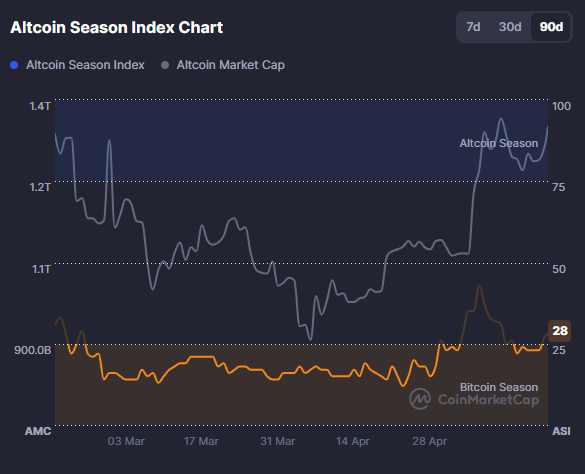
·         Broad commodities still in doldrums with S&P GSCI -3% and Baltic Dry Index -15.5%. However, there is some action in XPD/$ +18.3% and XPT/$ + 14% with oil and corn futures dropping 6.2% and 7.3% respectively. Deeper dive into XPT/$ reveals it has entered a big bull market lately jumping form $970 in 03/25 to $1402 today which is a +40% price increase and a new ATH $1422 too. Corn futures at $400 now targeting low $360 on 08/24 and after that $301 on 04/20. The grain has been on a massive downtrend last 3Y. BTC/$ made a new high at $119.5k with SOL/$ and XRP/$  up 11.6% and 29.3% whilst memecoins SHIB/$ and DOGE/$ also up 10.2% and 12.8% last 1M. On 09/07, US copper imports also been hit by 50% tariffs to boost domestic production which has disadvantaged big exporters Chile, Canada and Peru.


·         On 30/06, BTC/$ has hit $108k with the biggest driver was the progress of a stablecoin regulation bills through Congress, highlighteing Trump’s commitment to doling out more crypto-friendly regulations. Further signs of government adoption continued with Freddie Mac and Fannie Mae signalling they would consider using crypto as collateral in home loans. In addition to institutional adoption, risk appetite was boosted over the past week by Israel and Iran ceasefire which appears to be holding. According to Macquarie, Trump also seemed to dissuade “regime change” in Iran, thus disminishing the prospect that Iran will devolve into social instability or chaos. Also, the combination of Iran’s proportional response and prospect that she will not disrupt the flow of oil has led of large declines in the price of Brent crude.


·         As the 09/07 deadline for US-EU tariff deal approaches, with scant progress so far towards mutually-agreed baseline levies, concern is growing over how long will market stay numb to trade risks. Oil has swung $63 – 81/bbl in Jun making it once of the most volatile months for crude in 15 years


·         On 25/06, oil rises as draw in US crude stocks signal firm demand with de-escalation of conflict between Iran and Israel refocusing market back to fundamentals. Oil crude oil inventories fell for a 5th straight week whilst gasoline stocks upexpectedly fell 2.1M barrels compared with forecase for a 318k barrel build. On Saturday, Rosneft Igor Sechin said OPEC+ could bring forward it output hike by around a year from initial plan. Meanwhile, Trump has hailed a swift end to war between Iran and Israel and said Washington would likely seek a commitment from Tehran to end its nuclear ambitions at the next talks.


Key QnA

·         xx


Sunday, June 15, 2025

Contrarian Updates on 13 Jun 2025 [CH]

 Global Markets


US Yield Curve & Fed Rate Monitor


Crypto Market Tracker 


Key Macro & Technicals


  • 过去几周基本保持不变,美元指数下跌 1.2%,最大的变动是美元兑加元和美元兑瑞士法郎分别下跌 2.7% 和 2.4%。MSCI 世界指数和标普 500 指数也没有太大变化,分别上涨 0.7% 和 0.2%,自 2025 年 4 月以来的反弹似乎正在失去一些动力。4 小时 DI+ 线持续下跌,未来几周可能出现死亡交叉。
  • 在股票市场中,最大的变动是俄罗斯指数下跌 4.6%,能源板块(通过 XLE)上涨 4.4%,而金融板块(XLF)回落 3.2%。不出所料,VIX、OVX 和 GVZ 分别回落 7.6%、13.6% 和 10.8%,但 VIX、SKEWX 和 VVIX 分别上涨 10.1% 至 17%。
  • 固定收益市场总体稳定,房地产投资信托基金则涨跌互现,SPG 下跌 4.6%,而 PREI 上涨 9.4%。商品市场则出现了更多波动,波罗的海干散货指数上涨 46.1%,而 XAG / 美元和 XPT / 美元分别上涨 12.5% 和 22.4%,后者自 2014 年以来一直在约 760 至 1184 的区间内波动。最后,加密货币几乎没有变化,SOL / 美元、SHIB / 美元和 DOGE / 美元分别回落 13.8%、17% 和 21.9%。
  • 6 月 8 日,瑞银预计全球经济增长将在下半年放缓,但欧洲私人信贷利差预计将保持区间震荡。经济合作与发展组织 (OECD) 本周早些时候指出,由于全面关税可能对美国经济造成冲击,增长前景越来越具有挑战性。它将其对 2025 年全球 GDP 增长的预测从之前的 3.1% 下调至 2.9%。
  • 6 月 7 日,摩根士丹利认为,特朗普此前将铝进口关税提高一倍至 50% 的决定可能会推高金属价格及其用户的成本。此前,美国中西部含税铝溢价达到每吨 1279 美元,比特朗普于 5 月 6 日宣布计划提高铝和钢铁关税的 6 月 6 日上涨了 54%。该措施迄今为止今年已飙升超过 160%。
  • 6 月 2 日,中国强调,美国 “严重违反” 了他们的贸易休战协议,并将采取强有力措施维护自身利益。北京方面表示,违规行为包括停止向中国公司销售计算机芯片设计软件、警告不要使用华为制造的芯片以及取消中国学生的签证。此外,中国更倾向于先在较低级别达成协议,然后再提交给美国总统。
  • 因此,自 2025 年 5 月以来的反弹似乎在中美贸易协议和滞胀 / 衰退担忧方面都存在不稳定基础。根据最近的经验,明显的市场强势可能会在最轻微的发展或看法变化中消失。
  • 6 月 7 日,特朗普表示他与马斯克的关系已经结束,并警告说,如果马斯克资助反对支持总统全面税收和支出法案的共和党人的美国民主党人,将会有 “严重后果”。马斯克谴责特朗普的法案是 “令人作呕的罪行”,该法案上个月勉强通过众议院,目前正在参议院审议,特朗普的共和党同僚正在考虑对其进行修改。无党派分析人士估计,这项措施将在 10 年内使 36.2 万亿美元的美国债务增加 2.4 万亿美元,这令财政鹰派立法者担忧。马斯克还宣布,美国是时候成立一个新的政党来 “代表中间的 80%” 了。
  • 5 月 26 日,明尼阿波利斯联邦储备银行行长卡什卡里警告说,特朗普的贸易关税造成的供应冲击可能会支撑通货膨胀并抑制增长 —— 形成滞胀局面。在谈到最近美国国债收益率上升时,卡什卡里指出,投资者正在开始重新评估对美国的投资,收益率的变化可能代表着一种新的全球模式。
  • 5 月 25 日,芝加哥联邦储备银行行长古尔斯比也强调了由于特朗普的政策而存在的滞胀风险,并表示美联储可能会推迟对利率的任何调整。许多市场、经济和金融专家已经开始公开警告,如果滞胀不发生,几个月内就会出现经济衰退。市场预计美联储今年将降息两次,下次行动要到 2025 年 9 月才会发生。
  • 5 月 24 日,最高法院在特朗普诉威尔科斯案中的最新举动正在加剧市场对美国扩大行政权力日益增长的影响的关注。策略师阿尼克特・沙阿指出,更广泛地转向 “单一行政理论”(特朗普政府所采用的法律原则)可能会从根本上重塑美国治理,并为金融市场注入更高的政策风险。该理论认为,总统对行政部门拥有完全控制权,包括解雇独立机构领导人以及否决国会支出决定的权力。杰富瑞公司认为,如果这种解释获得进一步的法律支持,它可能会使特朗普能够更自由地实施关税,取消各行业的监管,而无需通常的行政审查,并更换传统上不受政治压力保护的机构负责人。

Contrarian Updates on 13 Jun 2025 [EN]


Global Markets


US Yield Curve & Fed Rate Monitor


Crypto Market Tracker 


Key Macro & Technicals


Market Commentary 

·         Last few weeks have been unchanged with USD Index -1.2% amd biggest mover being $/CAD and $/CHF which dropped 2.7% and 2.4%. MSCI World and SPX haven’t moved much either with both +0.7% and +0.2% respectively and it seems the relief rally since Apr 2025 losing some steam. 4H DI+ line keeps falling and there might possiblity of a death cross in coming weeks.


·         Within equity space, the biggest mover has been Russian Index -4.6 with energy sector via XLE +4.4% whlist financials XLF has pulled back -3.2% Unsurprisingly, VIX,  OVX and GVZ receded 7.6%, 13.6% and 10.8% but VIX, SKEWX and VVIX jumped 10.1 – 17%.


·         Fixed income generally steady whilst REITs were mixed with SPG -4.6% whilst PREI +9.4% respectively.   Commodity markets saw more action Baltic Dry Index +46.1% whilst XAG/$ and XPT/$ both rallying 12.5% and 22.4% with the latter trading within the congestion channel circa 760 – 1184 since 2014. Finally, crypto hardly moved with SOL/$, SHIB/$ and DOGE/$ pulling back 13.8%, 17% and 21.9%.


·         On 08/06, UBS sees global growth to slow in the 2nd half but European private credit spreads are tipped to remain rangebound. The OECD flagged ealirer this week that the growth outlook is increasingly challegnging due to potential headwinds from sweeping tariffs denting the US economy. It slashed its projection for global GDP growth for 2025 to 2.9% from prior estimate 3.1%


·         On 07/06, Morgan Stanley weighed in that Trump’s decision to double tariffs on aluminium imports to 50% ealirer will likely drive up prices of the metal and costs for its users. Earlier, the US Midwest duty-paid aluminimum premium reached $1,279/ metric ton, representing a 54% spike from 06/06 when Trump announced his plans to hike alumnium and steel tariffs from 05/06. The measure has soared more than 160% so far YTD


·         On 02/06, China highlighted that the US has “severly violated” their trade truce and will take strong measures to defend its interests. Beijing said voliations include stopping sales of computer chip design software to Chinese companies, warnings against using chip made by Huawei and cancelling visa for Chinese students. Also, the China prefers that agreements be done at a lower level first before they reach the desk of the US president.


·         As such, its seems the relief rally since May 2025 has shaky foundations on both the China-US trade deal and stagflation/ recessionary fears. From recent experience, the apparent market strength could disappear on the slightest developments or change in perceptions.


·         On 07/06, Trump said his relationship with Elon is over and warned there would be “serious consequencies” if Musk funds US Democrats running against Republicans who vote for the president’s sweeping tax and spending bill. Musk has denounced Trump’s bill as a “disgusting abomination” with said bill narrowly passing the House last month and is new before the Senate, where Trumps’s fellow Republicans are considering making changes. Non-partisan analysts estimate thae measure would add $2.4T to the $36.2T US debt over 10 years which worry fiscal hawk lawmakers. Musk also declared it time for a new political party in US the to “represent the 80% in the middle”.


·         On 26/05, Minneapolis Fed Kashkari warned that supply shocks stemming from Trump’s trade tariffs stood to underpin inflation and dampen growth – presenting a stagflationary scenario. Speaking on the recent increase in Treasury ields, Kashkari noted that investors were beginning to reassess investing in the US and shifting yields could represent a new global paradigm.


·         On 25/05, Chicago Fed Austan Goolsbee also highlighted stagflation risk due to Trump’s policies and said Fed likely to be putting off any changes to interest rates. Many market, economic and financial experts have begun publically warning of a recession within few months if stagflation doesn’t happen. Markets expect the Fed will cut twice this year with the next move not happening until Sep 2025.


·         On 24/05, the Supreme Court’s latest move in Trump v. Wilcos is sharpening market focus on the growing implication of expanded executive authority in the US. Strategist Aniket Shah flagged that a broader shift toward the “Unitary Executive Theory” a legal doctrine embraced by the Trump administration could materially reshape US governance and inject higher policy risk into financial markets. The theory posits that the president has sole contorl over the executive branch, including the power to fire leaders of independent agencies and override congressional spending decisions. Jefferies argues that if this intepretation gains further legal traction, it could empower Trump to more freely implement tariffs, deregulate sectors without the usual adminstrative checks and replace head of agnecies traditionally shielded from political pressure.


Friday, May 23, 2025

Contrarian Update on 20 May 2025


Global Markets


US Yield Curve & Fed Rate Monitor


Crypto Market Tracker 


Key Macro & Technicals


Market Commentary 

·         MSCI World and S&P 500 continues to extend the up-move having rallied 4.4% and 5.4% around the last 2 weeks. Mag 7 clearly outperforming  as NASDAQ moved even higher +7.2% in the same period. ROW equities also positive by not much between 0.4$ - 1.6% except for Russia Index which pulled back 1.9%. Deeper dive reveals that S&P 500 has gapped through key line of polarity 5780 and broken above 200-day SMA recently despite the weak trading volume but rising market breadth. In the 09/24 publication, we had forecasted S&P 500 hitting 6100 levels which came to passed and after that next level 7200 – 7363. Updated the Fibo clusters and there is an interim level 6840 – 6915 and reconfirmed 7212 – 7299 levels.


·         Having said that, still feel these higher levels are too high given that 6100 level already +76% PnL from last COVID low 3500 in FY2020. Based on S&P 500 trading history since GFC 2008, the index has rallied 34 – 120% each trading cycle so 76% PnL from 10/22 low is getting towards the high end of the range. Also, Fibo time projection indicate that 23 – 29 May is an important week so we need to keep close watch for any reversal sign. In terms of trading intuition, would feel that next Fibo level 6450 would be a more realistic ATH so the remaining 20% equity position being kept for that purpose. Also, noticed harami cross forming on 19/05 and the index has pulled back from 5970 to 5844 since then.


Also, noticed that CSI 300 has finally broken out of its 4H falling wedge lately so there seems to be more upside for Chinese equities from here. Interestingly, Chinese iron ore imports which should be hard hit with tariffs remain unaffected. ECB still on the rate cutting cycle since 2024 as well. 


·         FX markets been lackluster with USD Index only down -0.8%. Both G7 and Asian currencies have hardly moved with even the volatile AUD/JPY only dropping 1.6%. DEER model showing that JPY and CNY are the most undervalued versus the USD. Same goes for fixed income, REIT and commodities with 10Y UST +0.9%, IYR + 1.3% and GPSCI +0.3%. Even crypto has hardly moved but noticed BTC/$ settling into $109k level quite well this week. Only exception is BNB/$ retracing 12%.


·         On 14/05, HSBC expects $/MYR to reach 4.9 due to heightened uncertainty in the global economic environment triggering GLC to repatriate more funds back to Malaysia to support the Ringgit. “Total annual outbound portfolio investment jumped from $7B in 2022 to $10B in 2023 and then further moved to $24B in 2024. This makes Malaysia’s portfolio outflows the fastest-growing in the region compared to historical norms.


·         On17/05, the Fed was noted to have quietly vacuuming up $43.6B in US Treasury with $8.8B in 30Y bonds on 08/05 alone plus another $34.8B the week earlier. This monetary easing has helped prop up BTC/$ prices, gold and Latam equities among other risk assets.


·         On 13/05, China cast itself as defender of the multi-lateral world order wooing Latin American and Caribbean leaders at the China-CELAC Forum citing that “bullying and hegemony will only lead to self-isolation”. Two-thirds of the countries have signed up to the BRI infrastructure drive and China has surpassed the US as the biggest trading partner of Brazil and Chile. Xi’s top diplomat also urged Latin American nations to “join hands” with China to defend their rights against a country that is “using tariffs as a weapon to bully other countries”


·         On 14/05, the UK govt hit back as suggestions that the tariff agreement it reached with US last week could be damaging to China. This was triggered by conditions requiring the UK to “promptly meet” US demands on the “security of supply chains” of steel and aluminum products exported to the USA. China is UK’s 5th biggest trading partner and Beijing fears this arrangement could evolve into being excluded from supplying US-bound goods to the UK stating it was a basic principle that bilateral trade deals should not target other countries


·         On 15/05, US envoys in Africa will be rated on commercial deals struck, not aid spent touring it as a new strategy for US support shifting the strategy to “trade, not aid”. US ambassadors in Africa have already shepherded 33 agreements worth $6B in Trump first 100 days. However despite Trump’s aggressive spending cuts, Washington has pledged a $550M loan for the Lobita rail corridor, a shortcut for copper and cobalt from Zambia and Congo to Angola’s Atlantic port bypassing China-controlled routes. The US is keen to counter both Chinese and Russian influence in the continent particularly over minerals and trade. In one of China’s latest deals., a $652M loan agreement was agreed with Nigeria through Exim bank for a highway feeding the new Lekki port and Dangote refinery.


·         On 19/05, Treasury Secretary Scott Bessent said ratings were a “lagging indicator” and he added that he believes “that’s what everyone thinks” of the grades from credit agencies like Moody. This move has been long coming as Fitch made a similar downgrade in 20223 and S&P as far back as 2011. The agencies highlighted the growing US deficit now unusually high for a full-employment, peacetime economy as a key justification. Moody has maintained a perfect rating on US debt since 1917., making the downgrade historically significant. China has also weighted in urging the US to take responsible policy measures to maintain the stability of the international financial and economic system and safeguard the interest of investors


·         On 19/05, Japan PM Shigeru Ishiba has rejected rolling out tax cuts funded by additional debt as he argued that Japan financial situation worse than Greece. The backdrop for Ishiba has been the prospect of declining support ahead of a key upper house election in July with calls to slash taxes, including a levy on consumption and increased spending. However, Japan status a foreign creditor and domestic holding of sovereign debt has helped it evade the type of deep fiscal ructions experienced by Greece in 2009.


·         On 09/05, Trump did the trade deal with the UK with markets reacting well by rallying upon this development. However, on closer inspection its still early days and a nothingburger as UK constitutes only 3%  of all US trade whilst China is US’ 3rd largest trading partner. In the UK deal, Bentleys which were to be taxed 27.5% are now only hit with 10% tariff, British companies can now send plane part without tariffs and same goes for steel, aluminum and beef. These are scant details and RSM Chief Economist Joe Brusueles said “a trade agreement where details are still being negotiated is not an agreement”.


·         On 08/05, there were concerns that iron ore which is the major commodity most exposed to China would be taking a hit on Trade War 2.0 but surprisingly the prices have been resilient. China buys more than 70% of all seaborne volume which it uses to produce just over 50% of global steel. This dichotomy is most likely due to the fact that China’s steel demand is in sector less exposed to trade namely property and infrastructure which accounts for 60% of total demand. Whilst property sector has struggled in recent years, there are early signs that Beijing’s stimulus efforts have stabilized the market. The trade-exposed part of steel demand includes machinery, automotives and household appliances which together constitute almost a third of consumption.


·         On 07/05, Eurizon SLJ Capital’s Jen and Joana Frire wrote that the USD might face a $2.5T selling avalanche as Asian countries unwind their stockpiles to protect themselves from a deepening US-lead trade war. Jen also previously said that $1T could flow back to China as Chinese companies sell their USD-denominated assets when the Fed cuts interest rates. Accelerating this outflow might be “naked long-dollar positions” prevalent amongst Asian countries that run large surpluses such as Taiwan, Malaysia and Vietnam.


·         On 12/05, US and China have agreed to 90-day pause and will each lower reciprocal levies according to US Treasury Secretary Scott Bessent. BTC/$ has broken above $100k mark with other risk assets and XAU/$ fell 1% on this recent development. Trump has also signed an executive order to slaash US prescription drug prices by 30% to 80% to align them with the lowest price paid globally.


·         On 11/05, Nifty 50 jumped +3% as a US-brokered ceasefire in the Kashmir region appeared to be holding after India stuck several targets in Pakistan. However, Trump’s offer to help broker a deal over the hotly contested Kashmir region appears to have ruffled some feathers in New Delhi which historically remained skeptical of 3rd party negotiations in the region.


·         On 09/05, Trump surprisingly is pushing for a 39.6% tax rate on individuals earnings +$2.5M and couples earning +$5M to help fund his economic package. The plan could raise $67.3B over 10 yrs with additional $6.7B from eliminating the carried interest loophole. The proposal aims to offset the costs of extending Trump’s 2017 tax cuts but final agreement still pending.


·         On 08/05, GS maintained its 12M US recession probability at 45% noting its not unusual for hard data to lag event-driven recessions. Lower oil prices are positive for Asian economies which if sustained will improve their current account balance and act as a disinflationary force, providing more room for rate cuts. Also, GS noted that xxx that retail investors bought the last dip, in line with previous periods of major volatility.


·         On 07/05, Paul Tudor Jones was on CNBC saying stocks are bound to hit new lows even if Trump tones down his aggressive China tariffs.


·         On 07/05, European equities declined on concerns that Germany’s Friedrich Merz will come into power with diminished authority to push forward his agenda. Whilst Merz secured parliamentary backing as Germany’s new chancellor after a 2nd vote, the setbacks have reduced optimism for investors who were counting on ambitious plans for defense and infrastructure spending. On the tariffs front the EU plans to hit EUR 100B in US goods with additional tariffs in the event ongoing trade talks fail to yield satisfactory results for the bloc.


·         On 07/05, LGT Bank noted that current SPX record high in ROE 21.1% ranks in the 99th percentile since 1975. Also, USD is overvalued by 16% with JPY and CNY being the most undervalued.


·         The US trade deficit has worsened during Trump tenure widening to $140.5B in 03/25 driven by significant irse in imports of consumer good, autos and capital goods. Good imports surged 30% y/y with industrial supplies +335% and consumer good +58%. High-frequency data indicates that this import surge particular from the EU and trans-shipment hubs like Vietnam and Thailand peak in mid-April and expected to decline in May. This frontrunning activity, likely in anticipation of potential trade disruptions suggest upcoming trade data will show notable drop in import volumes.

Contrarian Updates on 11 Jul 2025 [EN]

Global Markets   US Yield Curve & Fed Rate Monitor   Crypto Market Tracker         Key Macro & Technicals     ...